
This historic, unincorporated community and former logging hub of Willisville is nestled along the edge of Frood Lake and the breathtaking white quartzite ridges of the La Cloche Mountains.
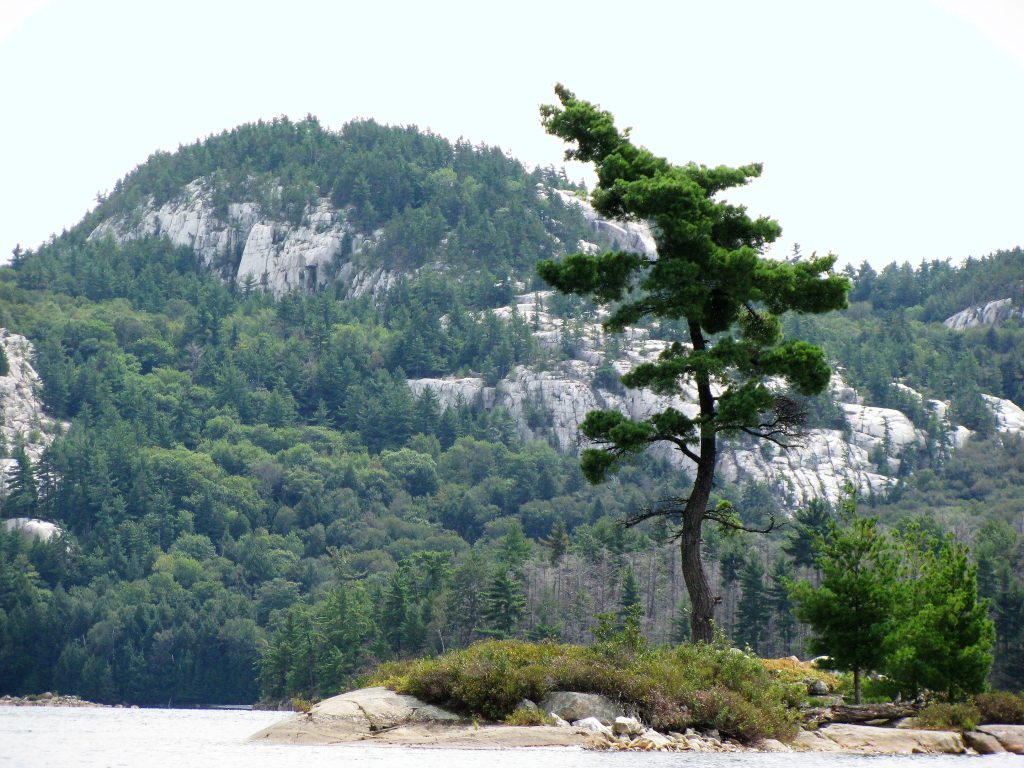
The early pioneers settled heavily in the early 1900s, it started as a seasonal gathering and camp area. Local pioneers (like the Willis and Golden families) helped construct the first railways and schools for the region.
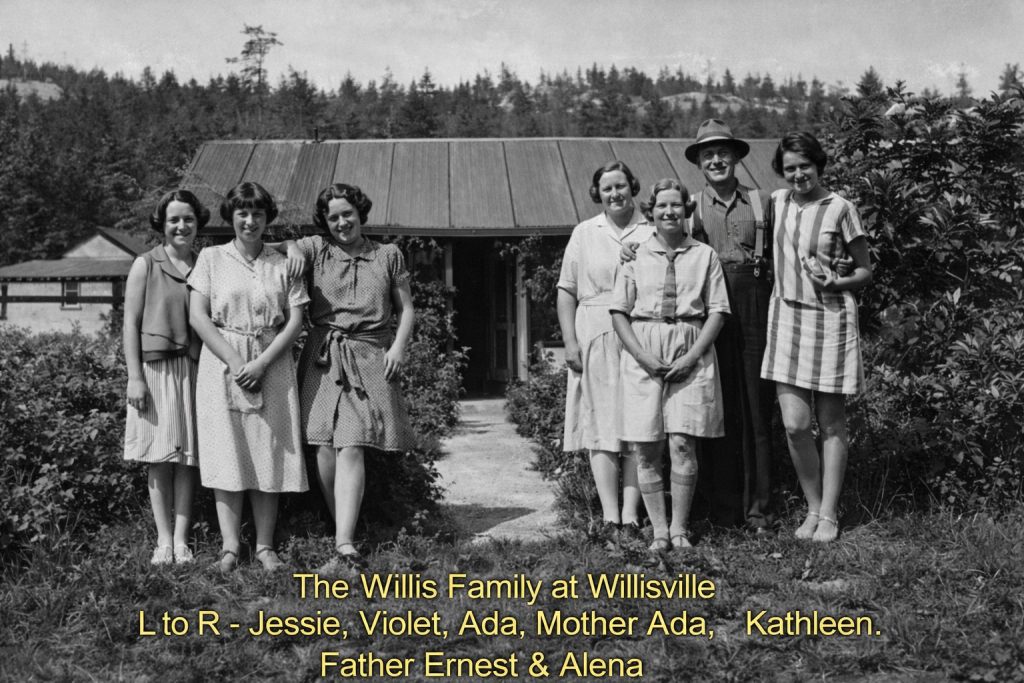
The Village of Willisville was named after Ernest Willis.
Ernest had come to Canada in 1875, from Wiltshire, England. The family, (his parents and three brothers) settled on Manitoulin Island. Ada’s parents came out a little before Ernest’s parents but they were on the same ship. Ada Humphrey and Ernest Willis were married in Markham which was where Ada was born. Ernest was a laborer and after he and Ada were married, they lived in Little Current for a time, moved to Webbwood and eventually settled in Willisville.
Ernest and Ada had 9 children. Ernest was a Forest Ranger and plied the lakes in his canoe, watching for fires. Shopping required a canoe trip as well with Portages from lake to lake before reaching the town of Espanola. Eventually a store there supplied the needs of the small village and those of tourists. Ernest was the first postmaster of the village in 1919. Ernest met with an untimely death in 1928 when he and a son-in-law were out chopping down dead trees for kindling wood. The top of one broke off and struck Ernest in the temple, killing him instantly.
The Algoma Eastern Railway connected Sudbury and Little Current in October of 1913. The train carried passengers and mixed freight on the 87-mile-long line. It was nicknamed the ‘Old Agony’ because it took 4 hours to travel from Sudbury to Little Current. The McKerrow to Little Current stretch, however, is fondly remembered as the ‘Blueberry Express’.
From 1914 to 1918, World War I created a demand for nickel and the Algoma Eastern Railway service. The International Nickel Company shipped its refined nickel product to the Turner Coal Docks in Little Current. The train returned with coal and other supplies from the Great Lakes port however by 1920, the demand for nickel declined and the railway now depended more heavily on carrying coal, wood products and tourists.
Work at INCO’s Lawson Quarry began in 1924 and this quarry would provide many years of a steady work for the rail line.
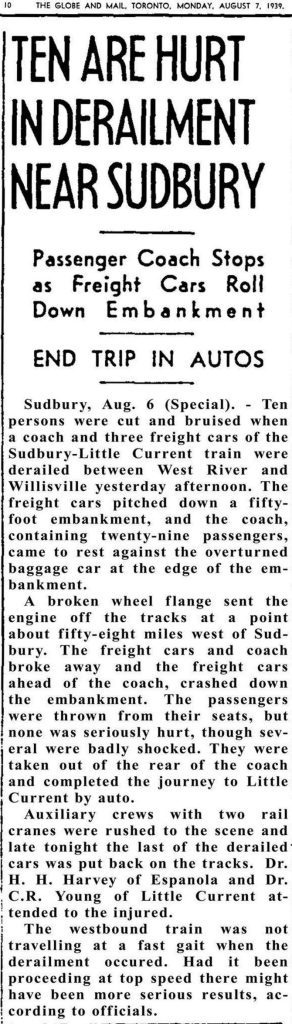
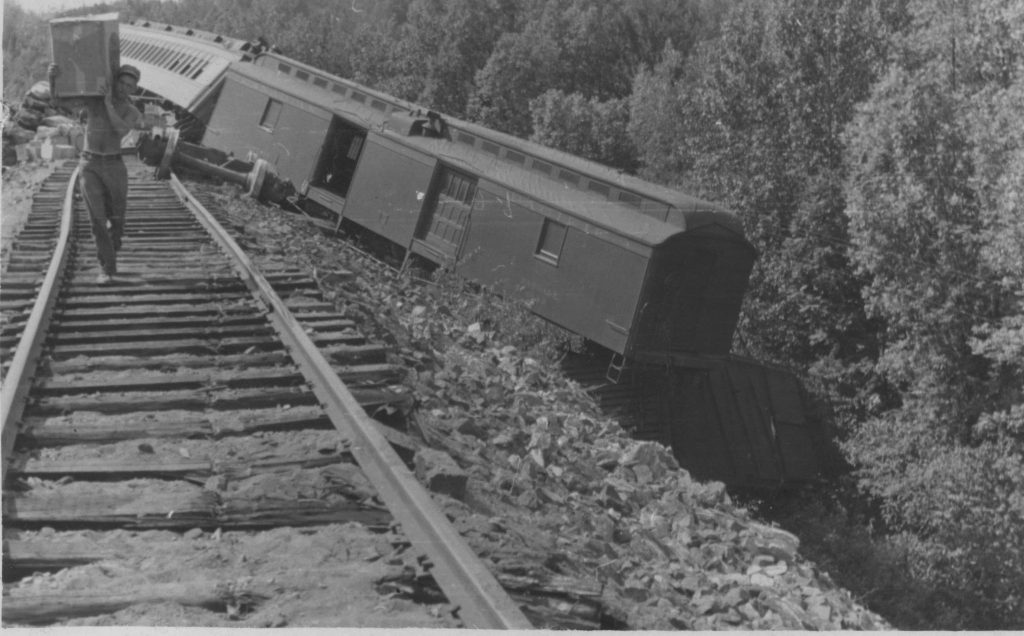
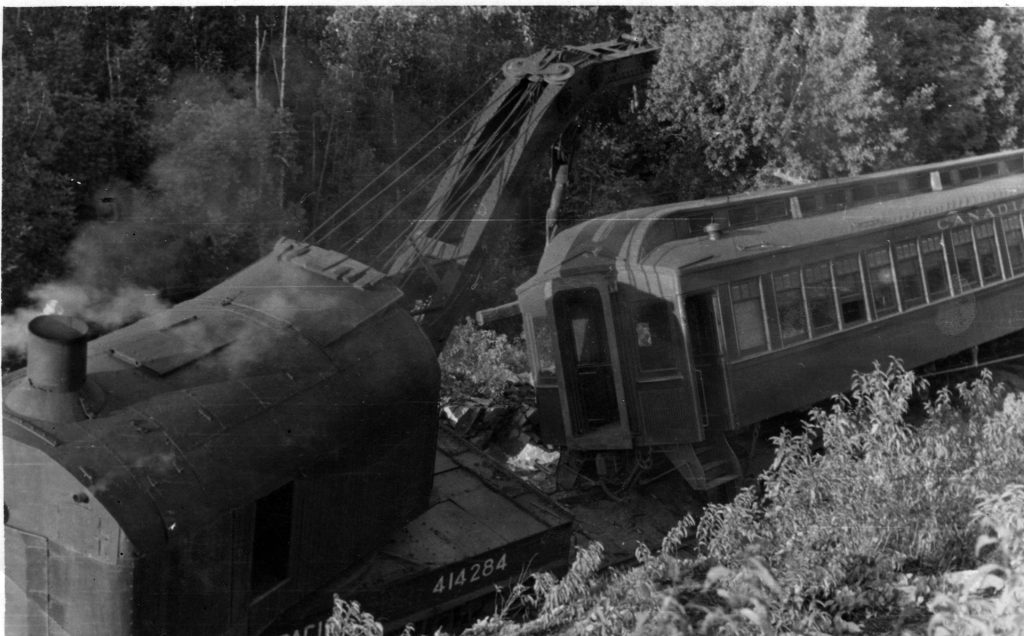
On August 5, 1939, a derailment near Willisville, saw 3 freight cars tumble down a 50-foot embankment. The coach, containing 29 passengers, came to rest against an overturned baggage car on the edge of the embankment and fortunately only 10 people were cut and bruised. They were treated and finished their journey to Little Current by car. Auxiliary Railway Crews used two railway cranes to put the last of the cars back on the track by the following evening.
In 1927, the Ontario Forestry Branch erected an 80-foot steel fire tower on Willisville Mountain. Tower Ranger John Burke managed the tower, and his guestbook featured notable visitors like Bing Crosby and boxing legend Joe Louis. The fire tower is no longer standing, but the hike up Willisville Mountain remains a popular destination.
Read more…https://lacloche.ca/willisville; Instagram