Sudbury, Ontario, began as a Canadian Pacific Railway outpost in 1883, transforming into a global mining powerhouse after nickel was discovered during construction.
The original name for the region was N’Swakamok, which translates to ‘where the three roads meet’ in the Ojibwe language. The Sudbury region was home to by Ojibwe people, an Anishinaabeg group, as early as 9,000 years ago following the retreat of the last continental ice sheet. In 1850, local Ojibwe chiefs entered into an agreement with the British Crown to share a large tract of land, including what is now Sudbury, as part of the Robinson Huron Treaty. In exchange the Crown pledged to pay an annuity to First Nations people, which was originally set at $1.60 per treaty member and increased incrementally; its last increase was in 1874, leaving it fixed at $4.
During construction of the railway in 1883, blasting and excavation revealed high concentrations of nickel-copper ore at Murray Mine on the edge of the Sudbury Basin. This discovery brought the first waves of European settlers, who arrived not only to work at the mines, but also to build a service station for railway workers. Provincial land surveyor JL Morris laid out the intersection of Elm Street and Durham Street in 1884 as he planned the township.
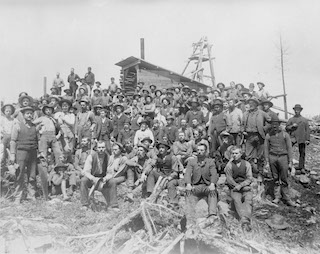
Rich deposits of nickel sulphide ore were discovered in the Sudbury Basin geological formation. The construction of the railway allowed exploitation of these mineral resources and shipment of the commodities to markets and ports, as well as large-scale lumber extraction. In 1886 the Canadian Copper Company and others besides had been formed with the idea to exploit the region’s natural wealth, and by 1888 the Copper Cliff smelter was born.
Sudbury was incorporated as a town in 1893, and its first mayor was Joseph Étienne aka Stephen Fournier.
Mining began to replace lumber as the primary industry as the area’s transportation network was improved to include trams. These enabled workers to live in one community and work in another. Sudbury’s economy was dominated by the mining industry for much of the 20th century.
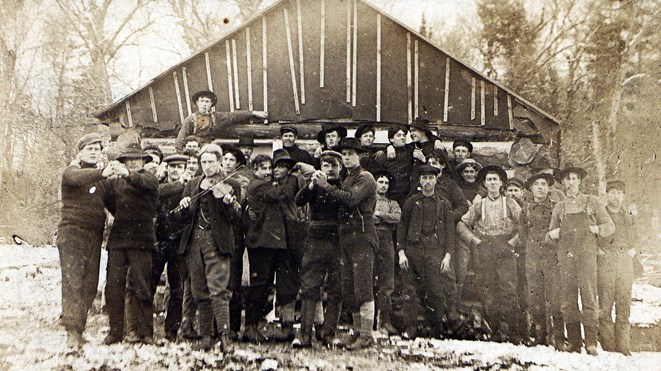
Sudbury District
The Sudbury District is a district in Northeastern Ontario in the Canadian province of Ontario. It was created in 1894 from townships of eastern Algoma District and west Nipissing District. In 1973, the Regional Municipality of Sudbury was created as a separate jurisdiction out of the district.
The overwhelming majority of the district (about 92%) is unincorporated and part of Unorganized North Sudbury District. With the exception of Chapleau, all of the district’s incorporated municipalities are found in the area immediately surrounding the city of Greater Sudbury to the west, east and south. North of the Greater Sudbury area, the district is sparsely populated; between Sudbury and Chapleau, only unincorporated settlements, ghost towns and small First Nations reserves are found.
Migration and Immigration
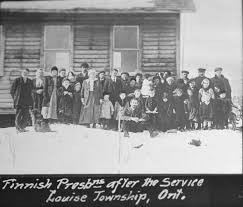
Sudbury’s history is defined by indigenous roots, French-Canadian settlement, and a massive influx of European immigrants driven by mining booms. Originally Ojibwe territory, the area grew from a railroad hub in 1883 into a multicultural nickel mining hub, attracting workers from Italy, Finland, Ukraine, and Eastern Europe, establishing a rich, diverse, and heavily francophone community.
Key Migration and Immigration Historical Trends:
Indigenous Roots: The area was known as N’Swakamok (“where the three roads meet”) and has been inhabited by the Ojibwe people for thousands of years.
Railroad and Mining Boom (1880s-1920s): The Canadian Pacific Railway expansion brought early settlers, but the discovery of nickel triggered massive immigration. Immigrants from Italy, Finland, and Eastern Europe arrived for jobs.
Francophone Immigration: French Canadians from Quebec and French-speaking immigrants from Belgium and Switzerland significantly shaped the region’s culture.
Post-WWII Immigration: Post-1945, Sudbury saw further waves of immigration from Europe, particularly from Italy, which shaped the city’s neighborhoods and cultural scene, as discussed in (though specifically discussing English immigrants, the study of immigrant experiences is relevant).