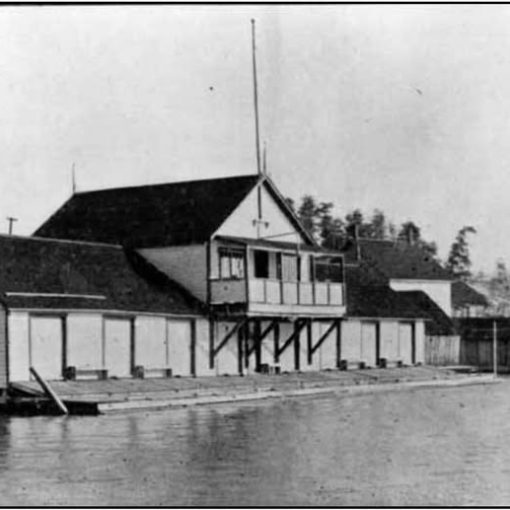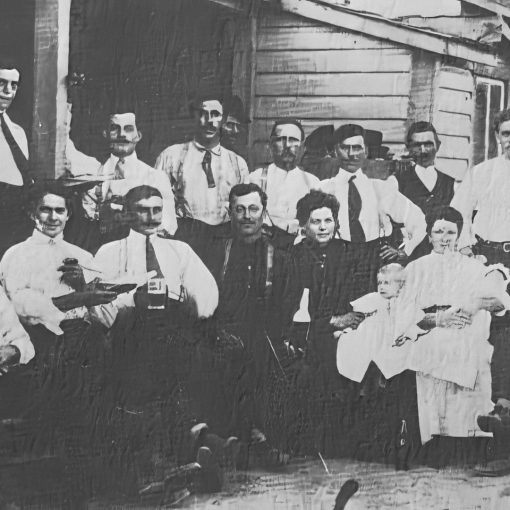
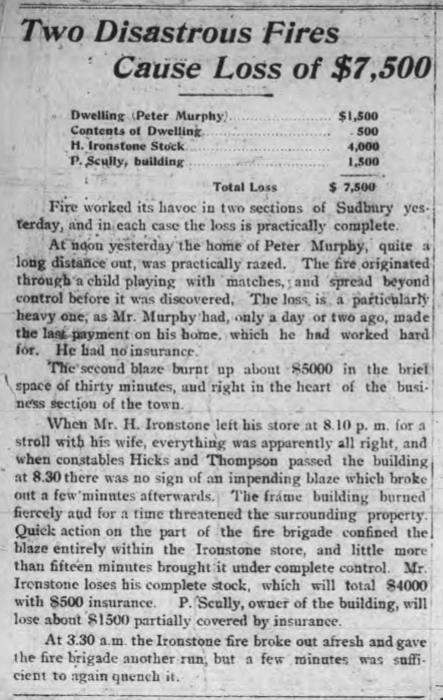
Sudbury, founded in 1883, experienced frequent fires throughout the 1890s due to wooden construction, railway sparks, and limited firefighting capacity. Heritage records confirm repeated losses of key structures.
In 1890 Robert H. Carmichael, was the first fire chief of the volunteer fire brigade.
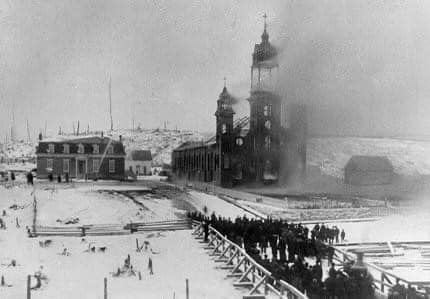
Ste.‑Anne des Pine’s Church, built in 1887, burned three separate times. The only pre‑1900 Sudbury fire with a precise date and detailed account occurred March 23, 1894. The cause was a candle that ignited nearby drapery. The Church was destroyed; only partial walls and towers remained.
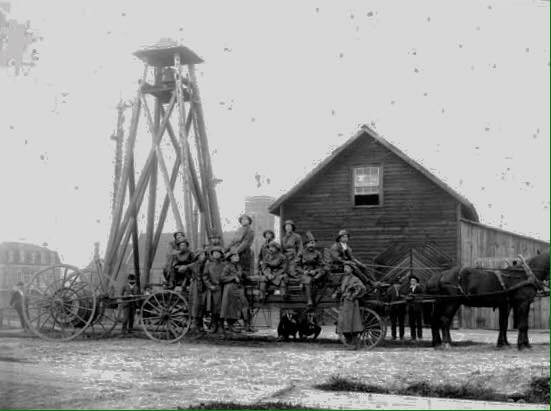
First Fire Brigade and Bell Tower 1890
The fire risk continued from 1895 to 1899. Fires continued to be common and Sudbury still lacked a reliable water system. A fire brigade was formed by the Board of Trade in response to ongoing hazards.
Between 1900 and 1910, Sudbury continued to face frequent and destructive fires. Early fire‑response systems were still developing, and many buildings could not be saved once ignited.
Downtown and residential fires were due to frequent chimney, stovepipe, and lamp‑related fires. Several boarding houses and small commercial structures lost. Residential fires occurred in the Flour Mill and Donovan areas, with industrial fires at mills and storage sheds.
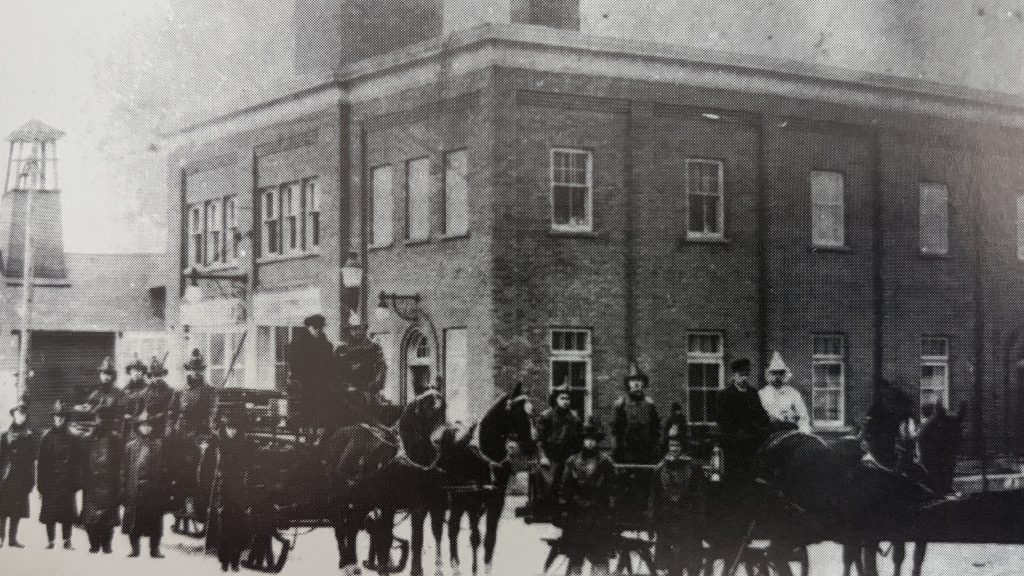
L Sudbury Fire Hall 1914
The Great Rink Fire of 1910 occurred around midnight after a roller-skating carnival on September 26, 1910, destroying a prominent local structure.
The construction of the Copper Cliff Fire Hall (1910) represented the community’s shift toward a more formal and reliable fire‑protection system. The Sudbury Fire Department started in 1910, with a new station in 1914.
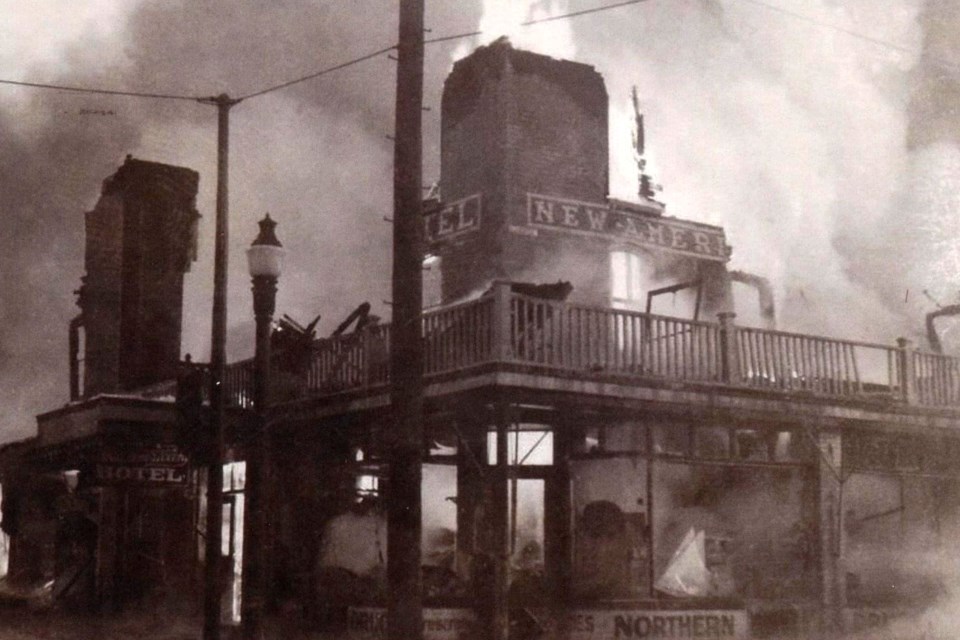
Evans Lumber Yard
Thomas Evans arrived in Sudbury in 1886, when he began working as a mason for the Canadian Copper Company. His family remained in Trenton initially due to the lack of established educational institutions for his young children in Sudbury. The rest of the family joined him in 1901.
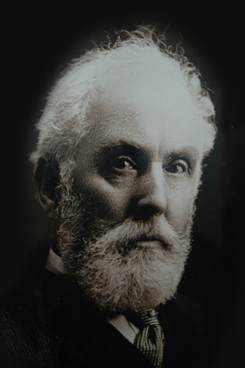
Thomas’ son, William Arthur arrived in 1889 and quickly became involved in what would become the family business. In 1896, Thomas’ contract with the Canadian Copper Company ended and he was left with a significant amount of surplus building material. Thomas established a partnership with his son, Thomas Evans and Son, to sell off the excess stock. The endeavor was so successful that the pair decided to remain in Sudbury.
Father and son determined that all types of quality building material would be in demand for the growing community so they committed themselves wholeheartedly into developing a business that would serve the needs of Sudbury’s builders.
L Thomas Evans
Evans Lumber Yard burned to the ground three times. It was highly susceptible due to dry lumber stock and proximity to rail lines.
A new store was built at the east end of Cedar St. in 1899, followed by a new mill and store on Xavier St. a year later. The new store was reorganized so as to supply Sudbury builders in a very efficient manner. The store became one of the first in Canada to assemble all varieties of building supplies under one roof.
A fire in 1908 resulted in the construction of new sheds, mills, and offices on Pine St. In 1931, W. Arthur passed away and the presidency of the company was taken up by his brother-in-law, Delmer Andress. Subsequently, the company was renamed The Evans Lumber Company, Limited.