Long before Sudbury existed, the lake was known in Anishinaabemowin as Bitimagamasing, meaning “water that lies beside the hill.” This name reflects the lake’s geography and its importance within local Anishinaabe territory.
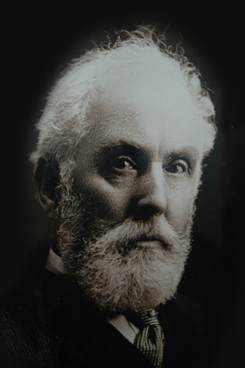
The modern name Ramsey Lake dates to 1879, during the Canadian Pacific Railway survey. In 1871, Sir Sandford Fleming’s original CPR route would have bypassed the future Sudbury entirely. When the survey was revised in 1879, survey chief William Allen Ramsey led the party through the area. A dense fog caused the team to become disoriented near the lake, which they temporarily called “Lost Lake.” Once the route was finalized, the lake was renamed Lake Ramsey to honour Ramsey’s “good judgement” in selecting the new line.
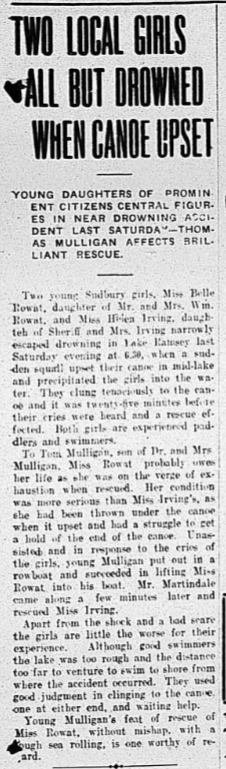
From the 1890s to the 1930s, the Ramsey Lake shoreline was dotted with summer cottages owned by early Sudbury business families, small year‑round homes near the Bell Park area, boathouses and camps along the western shore and early farm and homestead structures on the south/east side (later absorbed into Laurentian University lands). Almost all of these were removed as the city developed the lakefront for public use.
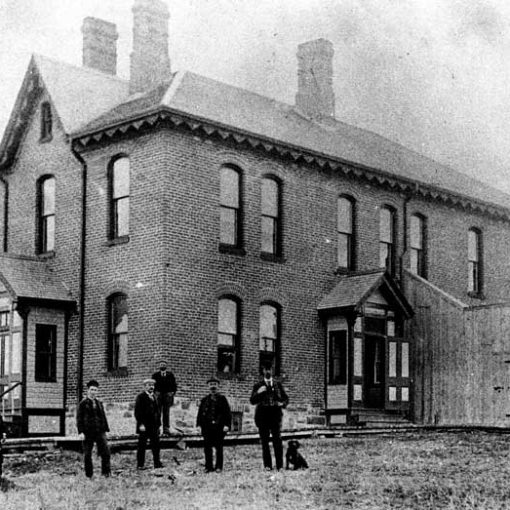
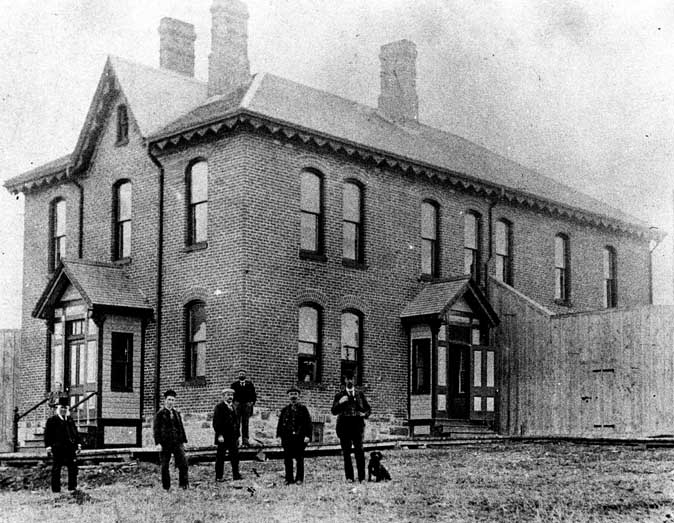
The Bell family’s large home overlooked the lake. It was built in the early 1900s. This is the most significant “original home” still visible.
The closest surviving early residential cluster associated with the Ramsey Lake area include Laurentian Manor (179 John St.), a historic stone residence (now a seniors’ home) dating to the early 20th century.; and several Edwardian and Arts‑and‑Crafts-era homes along John St., Elizabeth St., and Park St. These houses belonged to Sudbury’s early professional class who wanted proximity to the lake but built on the ridge above the shoreline.
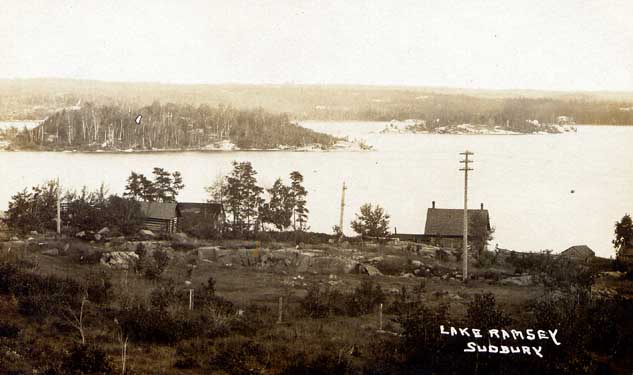
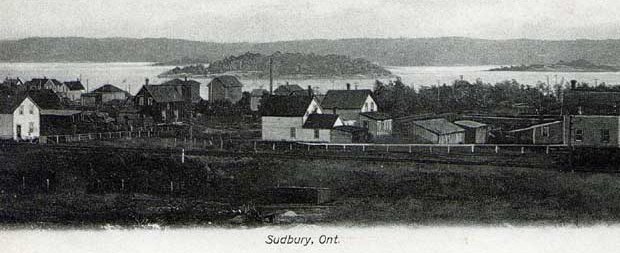
Sudbury Canoe Club
On August 11, 1902, the Sudbury Boating Club held its first regatta. Later known as the Sudbury Canoe Club, it was organized by William S. Beaton (1896-1956). The Canoe Club has been on 4 different sites and is one of Northern Ontario’s oldest continuously recognized community sports institutions.

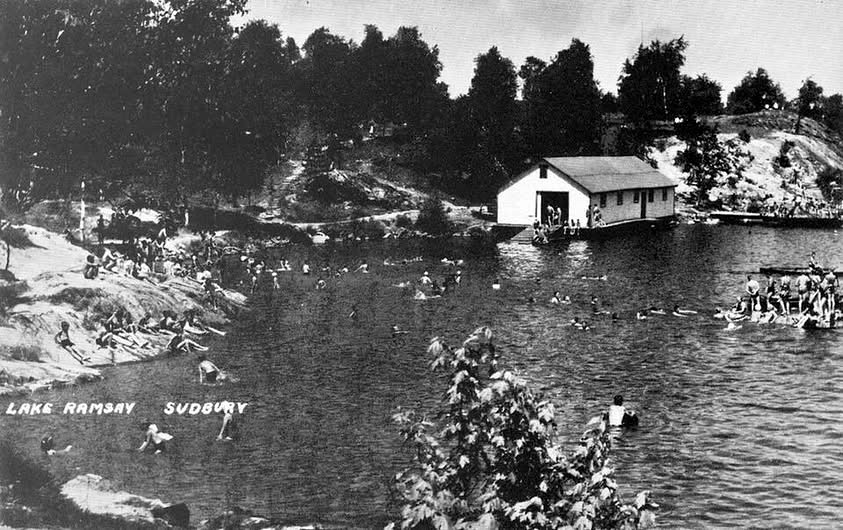
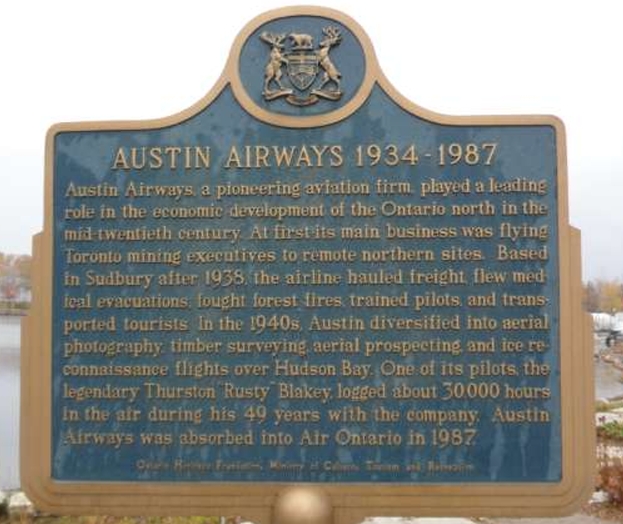
Austin Airways
By 1935, Ramsey Lake had become an important air base for the City of Sudbury and multiple aircraft could normally be seen on the ice during the winter and on floats in the lake during the summer. It was at this time that Jack Austin made a deal with Al “Skipper” Chalmers of Sudbury Boat and Canoe to establish a base for Austin Airways on their Ramsey Lake property. Initially, the Austin Airways base consisted of a dock and small shack.
Jack and Charles Austin, brothers in their early twenties, signed an agreement along with pilot Leigh “Cap” Capreol on February 21, 1934, which led to the establishment of Capreol and Austin Air Service. The company offered freight and passenger services, sold airplanes and aircraft supplies, tested planes, and provided flying instruction. The firm began with two small biplanes, one of them modified to act as an air ambulance. In the 1930’s, Ramsey Lake was the centre of airplane activity in the City. Several operators were in the area and regular flights to Chapleau or Timmins were available at certain times of the year. Jack and Charles Austin were the first to offer scheduled services from Lake Ramsey with fabled pilots like Rusty Blakey, who joined the airline in 1937.
The main office was later moved to a converted house on the property in 1937, now known as 322 McNaughton Terrace. This Ramsey Lake location was Austin Airways’ main base of operations for the next 20 years.