
Have fun discovering your ancestors and gathering family stories.
Is your child curious, do they like to ask questions, are a good listener, pay attention to details, and have patience?
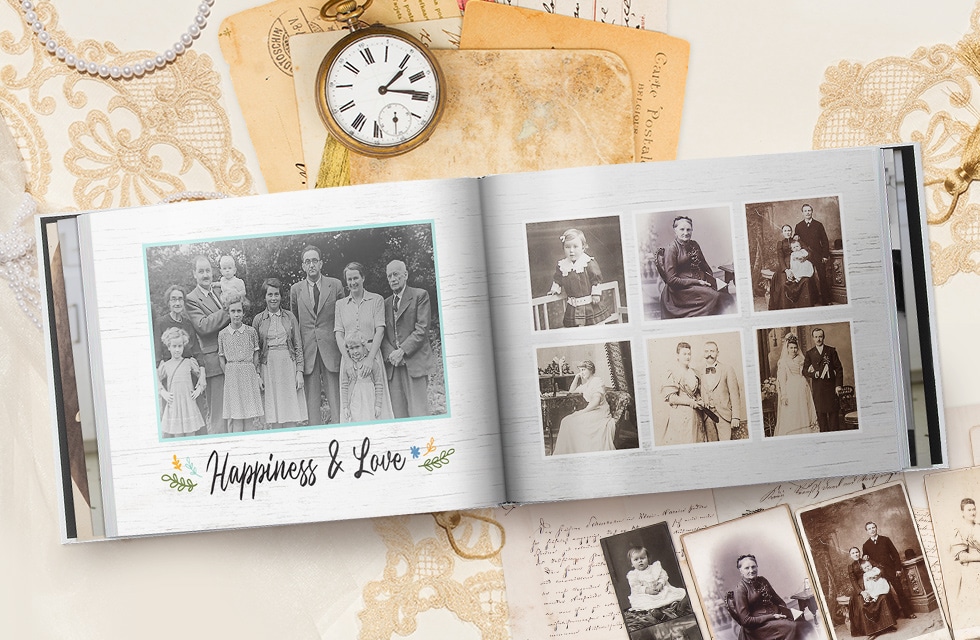
Learn about your family. Gather photos, letters, newspaper clippings, and artifacts.
Interview Relatives
Interviewing grandparents or any family member will create cherished memories for everyone involved.
Here are some suggestions for helping your children interview their relatives. Ask them which grandparent or family member they want to interview. You may suggest beginning with the oldest family member or the grandparent they are closest to.
Some helpful steps:
Your child’s interests can guide the questions. Examples of questions you may want to ask your relatives:
- Where were you born? What was the first home you remember?
- Did you have pets? What were their names?
- What is your favourite food? Book?
- What were the names of your parents? Where were your parents born?
- Did you or your family move or immigrate during your lifetime? From where to where, and when?
- How many siblings did your parents have? What were their names? Do you know where they were born, or where their parents were from?
- What are some family stories you remember?
- What was your first language? What language did your parents speak?
- Do you remember anyone in our family fighting in a war? If so, which war?
- What do your first name and surname/s mean? Do you know why you were named that?
- Did you change your name over the course of your life? If so, why, and what was your previous name?
- How did you meet your spouse?
- What do you remember about your spouse’s family?
Decide how to record the interview. If your child can’t write yet, they can draw the answer that their grandparents give while you do an audio recording. Older children can video record the interview and turn it into a film, or turn the answers into a book that can be shared with family members.
Determine the length of the interview. For young children, interviews can be as short as one or two questions. Older children can usually stay focused for 30 minutes to 1 hour. It is important to be flexible and ask how long the person being interviewed is able or willing to continue. If your child still has questions to ask after the allotted time, set a time for a follow-up interview.
Create a Family Tree
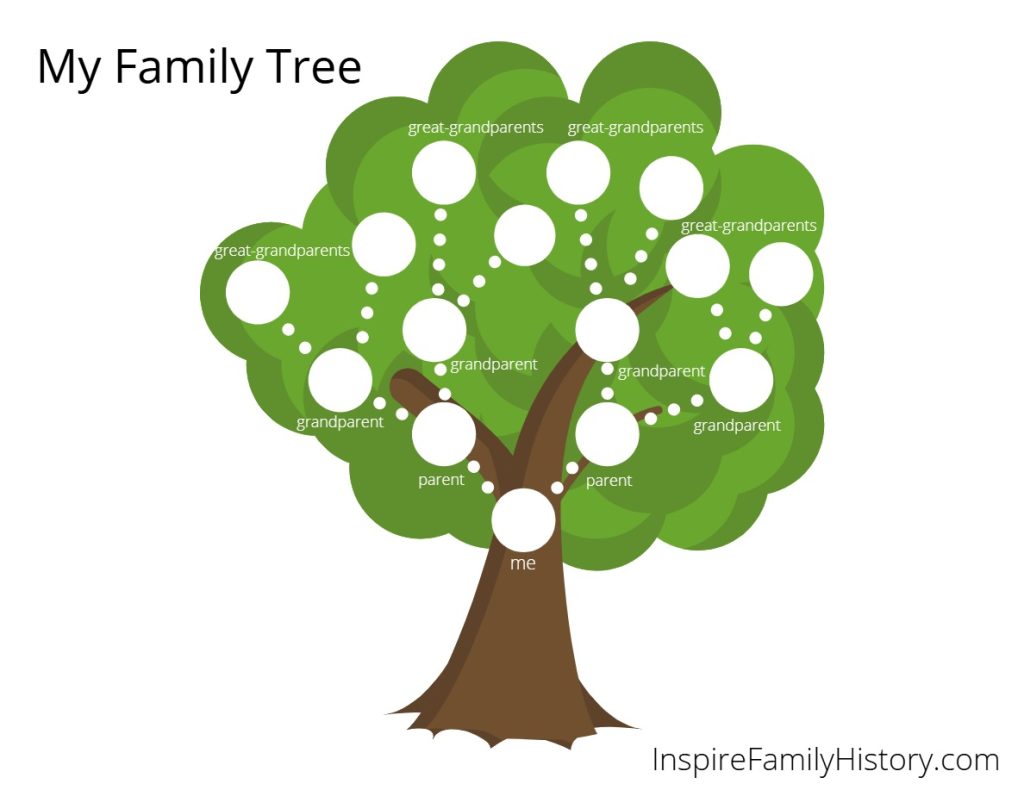
Creating a family tree can help children visually understand that they are part of something greater than themselves.
When completed, display the tree somewhere they will see it regularly, such as their room. Seeing their family tree will help them piece together the pieces of their family.
The tree provides children with a visual image that allows them to see many of their ancestors in one place and visualize how they are connected.
Right click on an image to copy.