The creation of Canada Day
July 1, 1867: The British North America Act (today known as the Constitution Act) creates Canada.
June 20, 1868: Governor General Lord Monck signs a proclamation that requests all Her Majesty’s subjects across Canada to celebrate July 1.
1879: A federal law makes July 1 a statutory holiday as the “anniversary of Confederation,” which is later called “Dominion Day.”
October 27, 1982: July 1, “Dominion Day” officially becomes Canada Day.
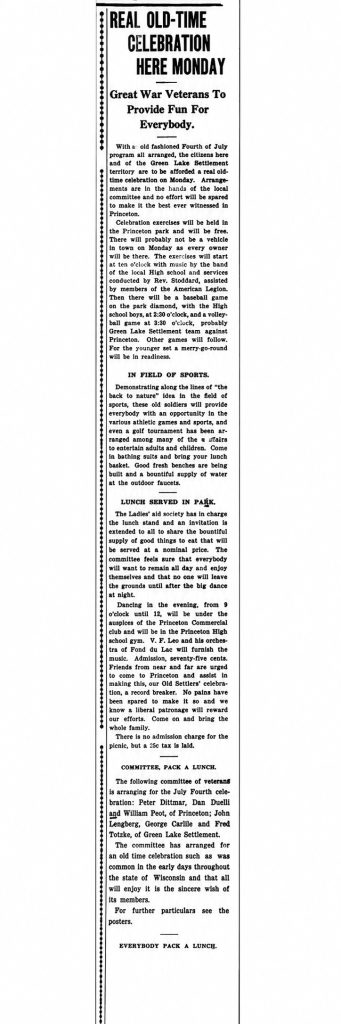
Early Dominion Day celebrations in Sudbury were modest due to the community’s small size. Typical activities likely included: Church services; community picnics; brass band performances; athletic competitions; baseball games, and evening dances
Dominion Day became one of the year’s largest civic holidays in the early 1900’s. Celebrations commonly featured: parades through downtown; horse races; baseball tournaments; fireworks; children’s sports, and excursion trains bringing visitors from surrounding communities. Local businesses often closed for the holiday.
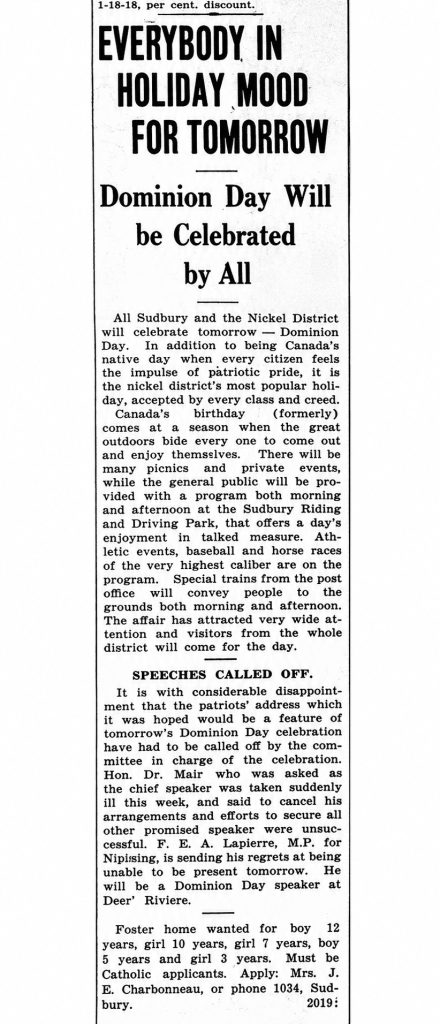
During the First World War celebrations became more patriotic. Military recruiting displays and fundraising events accompanied traditional festivities. Communities honoured local soldiers serving overseas. Entertainment was generally more restrained because of wartime conditions.
L The Sudbury Star June 29, 1918
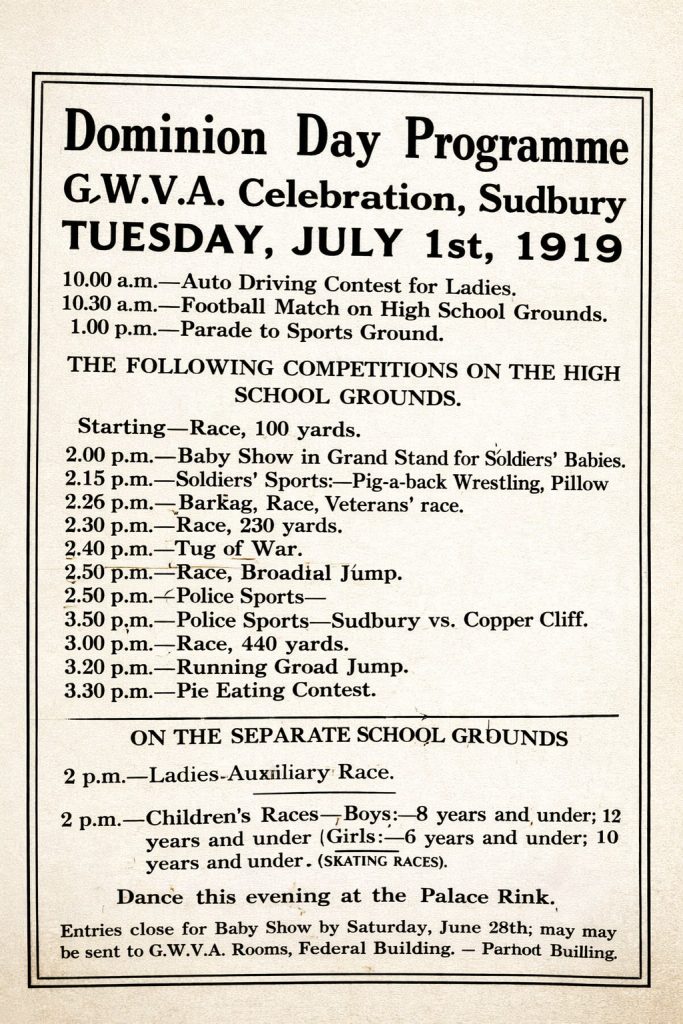
Following the war, larger community picnics returned; bands and musical performances became central attractions; automobile parades gradually replaced horse-drawn entries, and community organizations, churches, ethnic clubs and sports associations played active roles.
R The Sudbury Star June 30, 1922
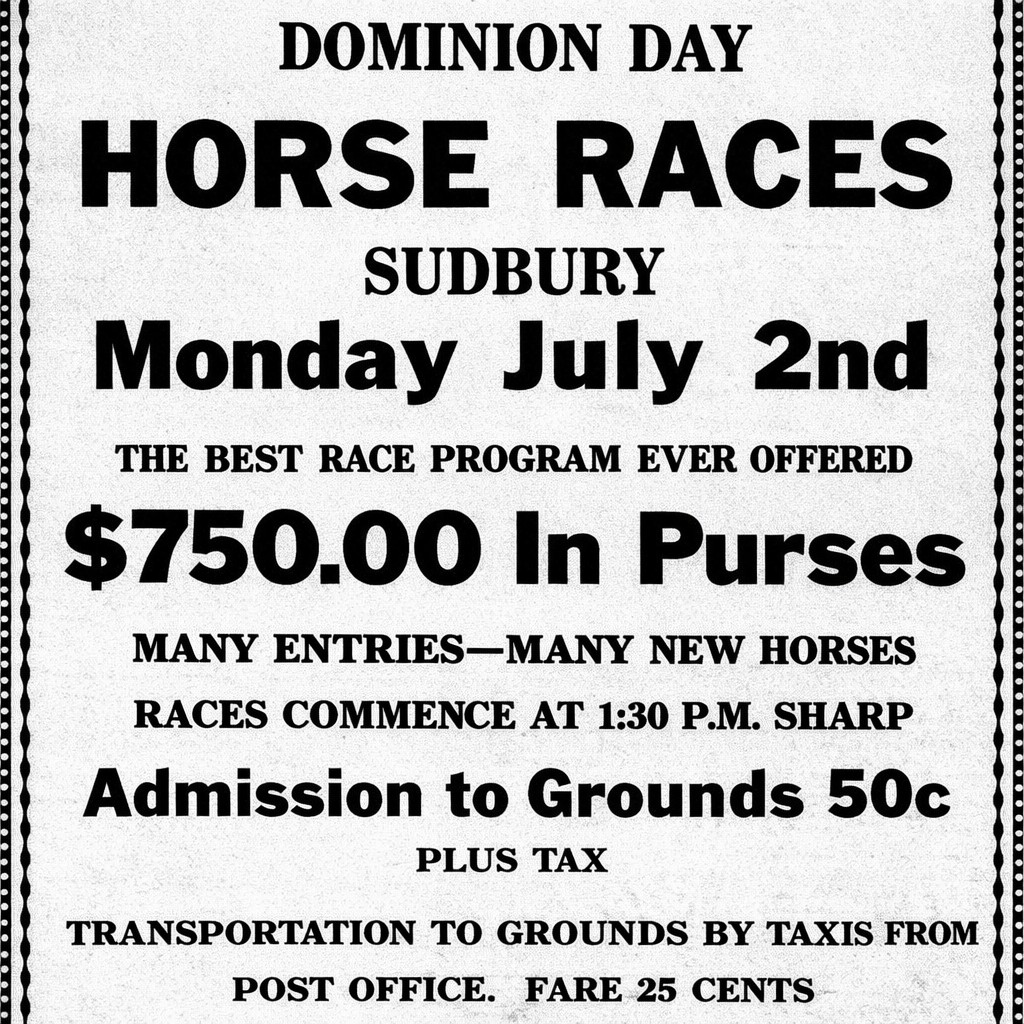
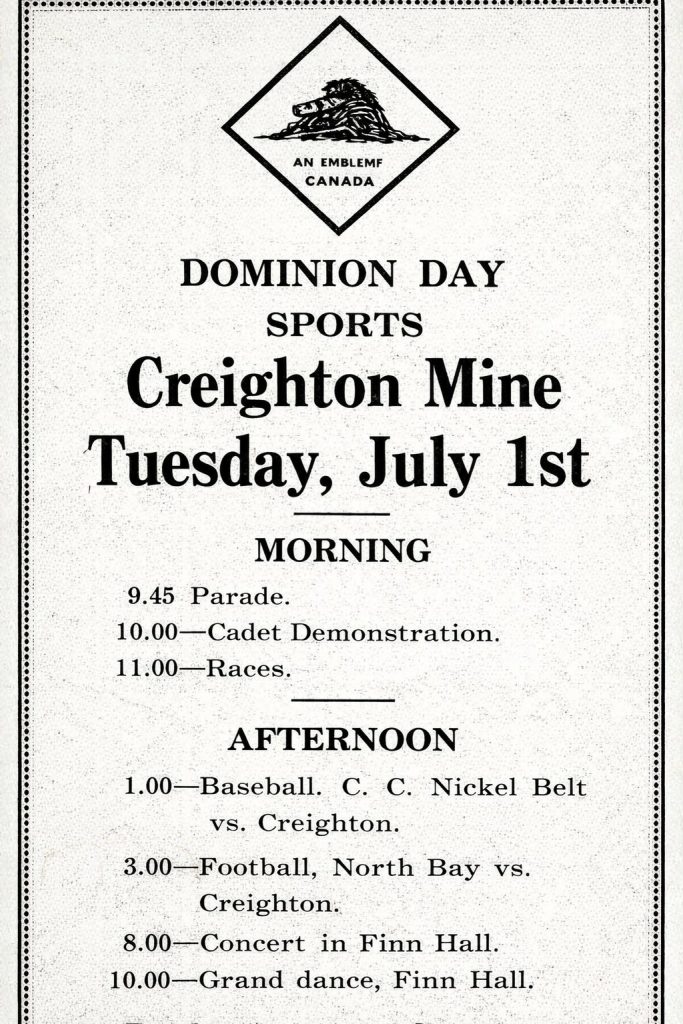
Despite economic hardship in the 1930s, Dominion Day remained an important community celebration. Municipal governments and volunteer organizations organized low-cost events including: children’s races; community sports; outdoor concerts, and public dances. The holiday provided a welcome break during difficult economic times.
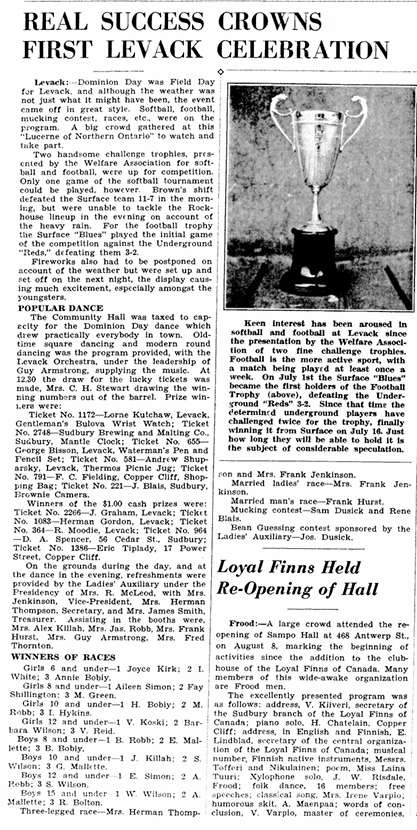
During the Second World War celebrations emphasized: patriotism; victory bond campaigns, military displays; recognition of local servicemen and women, and community gatherings supporting the war effort.
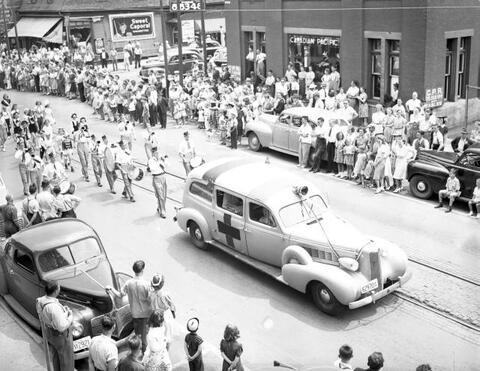
July 1, 1941 The Sudbury Star
One image of a white hearse, belonging to Jackson and Bernard Funeral Home, decorated as an ambulance driving down Elgin Street during the Lions Club Monster Dominion Day Parade in Sudbury, Ontario. The Copper Cliff Bugle Band can be seen marching behind the car and the Canadian Pacific Railway (C.P.R.) Telegraph Building (southwest corner of Elm Street and Elgin Street) is visible in the background.